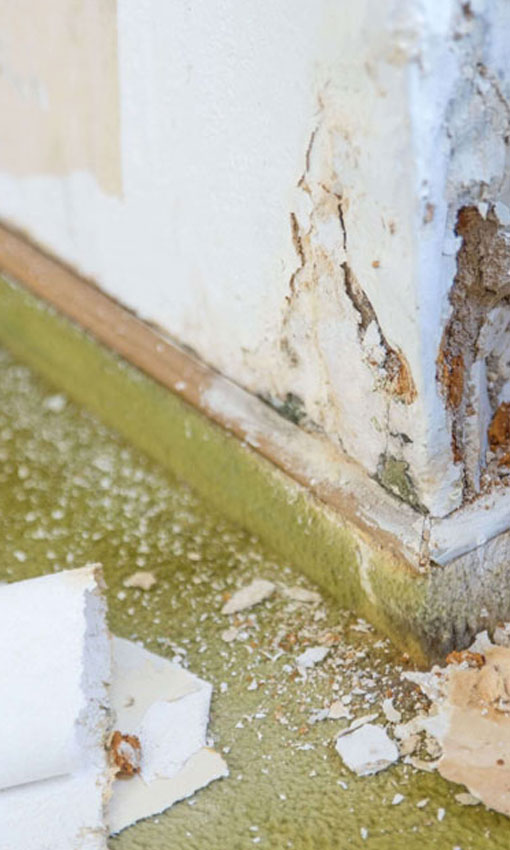
In newer buildings a barrier is placed into the base of the walls and floors known as a damp proof course, this prevents that movement. Some buildings especially those constructed in the late 1800's and early 1900's did not have a damp proof course, and some of the earlier versions of damp proof courses are of poor design and or poor materials. In these properties the moisture is free to move (Rising Damp) and can then deteriorate the masonry, timber floors, internal decorations and joinery.
There are a number of ways that would indicate that you may, have a Rising damp problem. Some visual signs of Rising Damp are, decaying skirting boards or floor timbers that are in contact with walls, deteriorating plaster possibly with a salty looking deposit, rendering that is discoloured or peeling. The salts that appear on the plaster not only attack and destroy it, the white powdery residue also has the ability to absorb moisture and make the problem worse.





Infected plaster must be removed and replaced with plaster that incorporates an integral water proofer and salt inhibitor, to prevent future decorations spoiling after the new damp proof course has been installed. All of our Damp proofing is installed in accordance with BS 6576 and is covered with an insurance backed guarantee.
Several methods used to cure Rising Damp and include use of chemicals, electrical and physical barrier systems. The most common method is a chemical water repellent liquid or gel which is simply injected into your walls.The key to the successful treatment of Rising Damp is the correct analysis and diagnosis, this is to ensure the correct method and materials are used to eliminate the Rising Damp. Our surveys are conducted to the UK's highest standards.